The golden lights come on at nightfall. The tower then sparkles for five minutes at the start of every hour. From autumn to spring the last sparkle is at midnight, and after it the tower is dark until the next evening. That is the schedule on the tower's official website as of October 2026.
The schedule, checked in October 2026
There is no fixed switch-on time. Sensors turn on the golden lighting when it gets dark, and the official site says this takes under ten minutes. The beacon at the top starts at the same moment. The sparkle is a separate set of 20,000 bulbs. It runs for five minutes at the first full hour after the lights are on, then every hour.
So the first sparkle follows the sunset. On 14 October 2026 the sun sets in Paris at 7.04pm and dusk ends around 7.36pm, which puts the first sparkle at 8pm, followed by 9pm, 10pm, 11pm and midnight. The clocks go back on 25 October. That evening sunset is at 5.43pm and the first sparkle moves to 7pm.
The official lighting page says that when the tower closes at 11.45pm, the lights and the beacon are switched off completely at midnight, and the final sparkle is at midnight too. In summer, from late June to early September, the tower closes at 12.45am. The golden lights and beacon then go off at 1am and the sparkle keeps going for a few minutes on a dark tower.
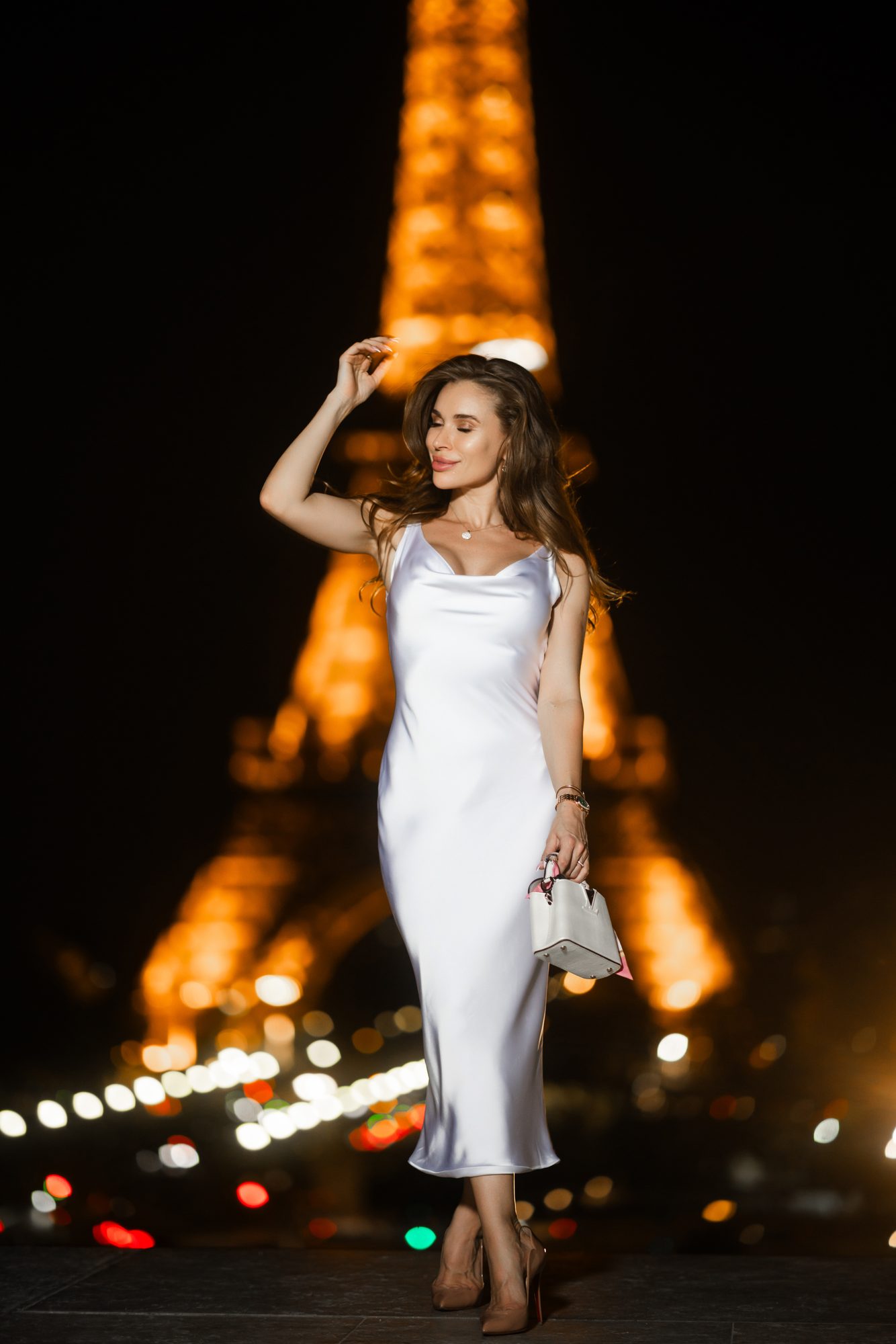
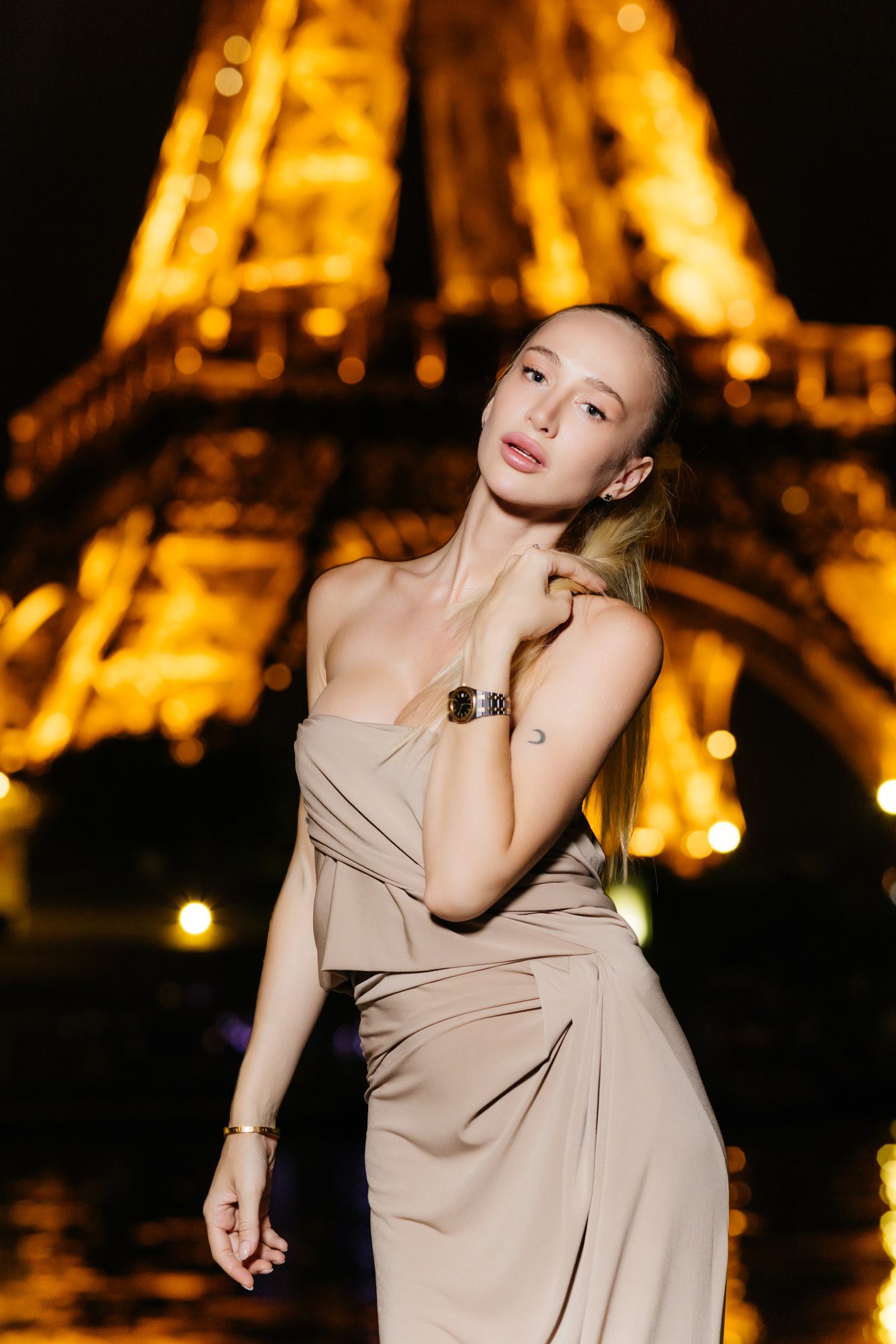
Trocadéro: the esplanade and the steps
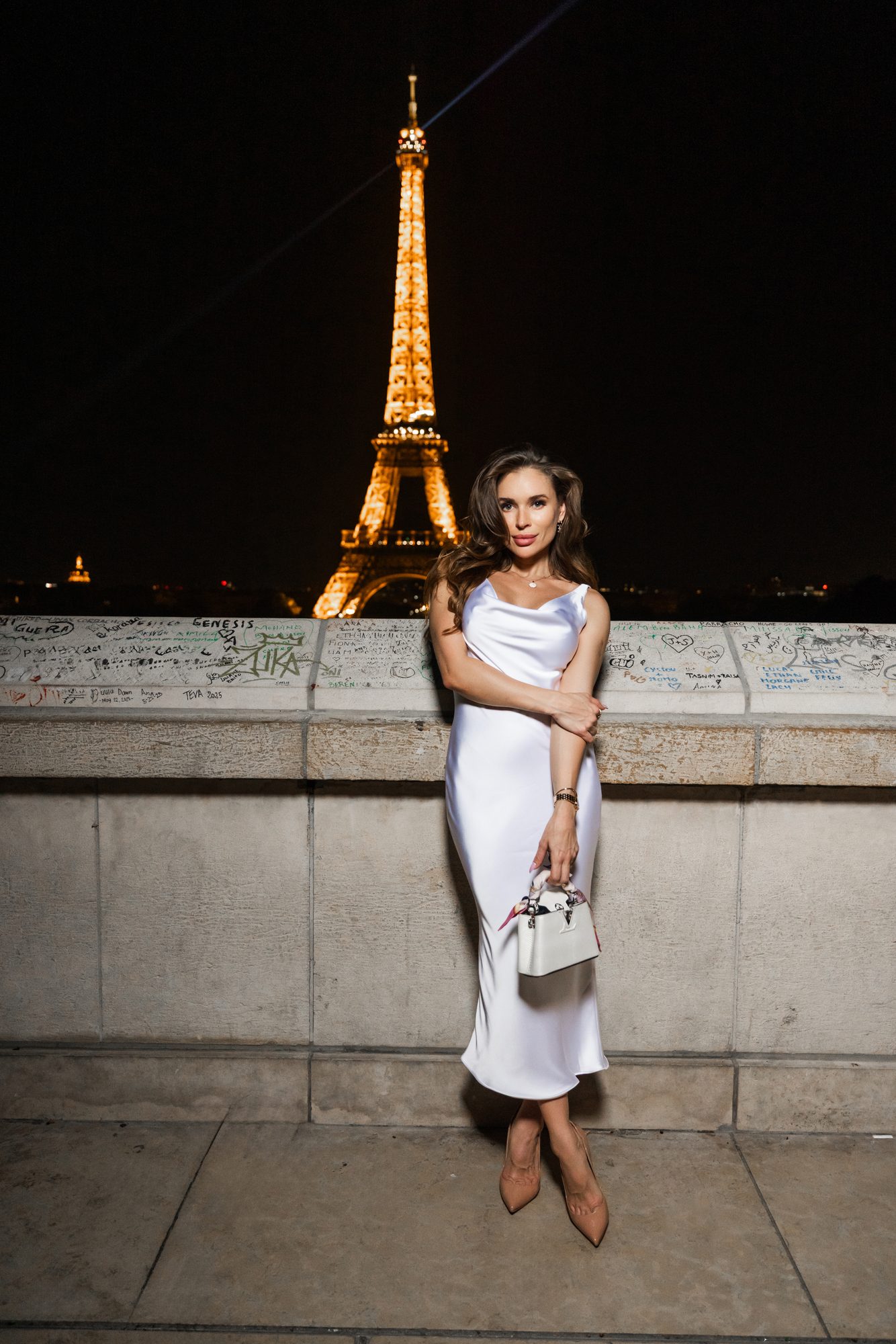
Metro Trocadéro, lines 6 and 9. You stand above the river and face the tower head-on, so the whole structure fits in the frame with a person in front of it. The golden light is the same at twenty past as on the hour, and you do not need to fight for a spot at exactly 9pm. From 14 October to 1 November 2026 three large statues by Tracey Emin stand on the esplanade for Art Basel and take up part of it.
The Trocadéro gardens and the fountain
Walk down the steps from the esplanade. The gardens are open 24 hours. Here the Warsaw fountain sits in the foreground, with its water cannons and statues lit in the evening. A photographer quoted on the tower's own site recommends standing at the centre of the fountains with a wide lens. On a phone, that is the 0.5x camera.
Pont d'Iéna and the quays
The bridge runs from the fountain straight to the tower's feet. Bus 72 stops at Pont d'Iéna. This close, the tower is too tall for a normal lens, so use the wide camera or step back onto the right bank quay, where the river is in front. The city plans a pedestrian zone in the middle of the bridge, but the temporary layout was removed in April 2025 and the permanent one was still being designed at the city's last update. Stay on the pavement.
Pont de Bir-Hakeim
Metro Bir-Hakeim, line 6. You get the Seine in the foreground, or the bridge's metal arches as a frame. Line 6 is being modernised: Bir-Hakeim station is closed on Sunday 18 October and on 8 and 22 November 2026.
Champ de Mars
Metro École Militaire, line 8, or RER C to Champ de Mars-Tour Eiffel. This is the view from the other side, looking up at the tower from the lawns. The park is open 24 hours, but the city is renovating its paths and lawns, so some sections may be closed off when you come.
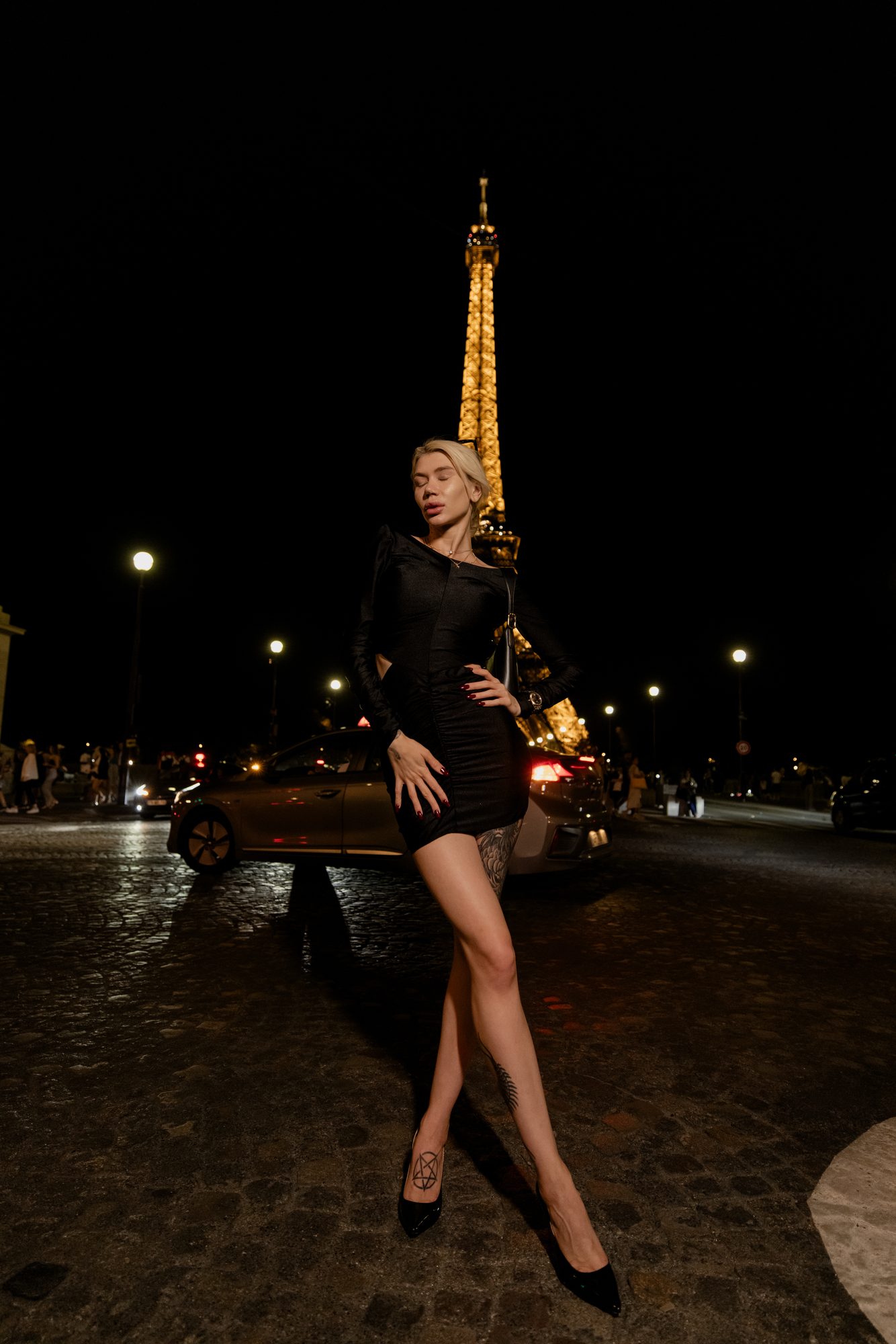
Streets with the tower at the end
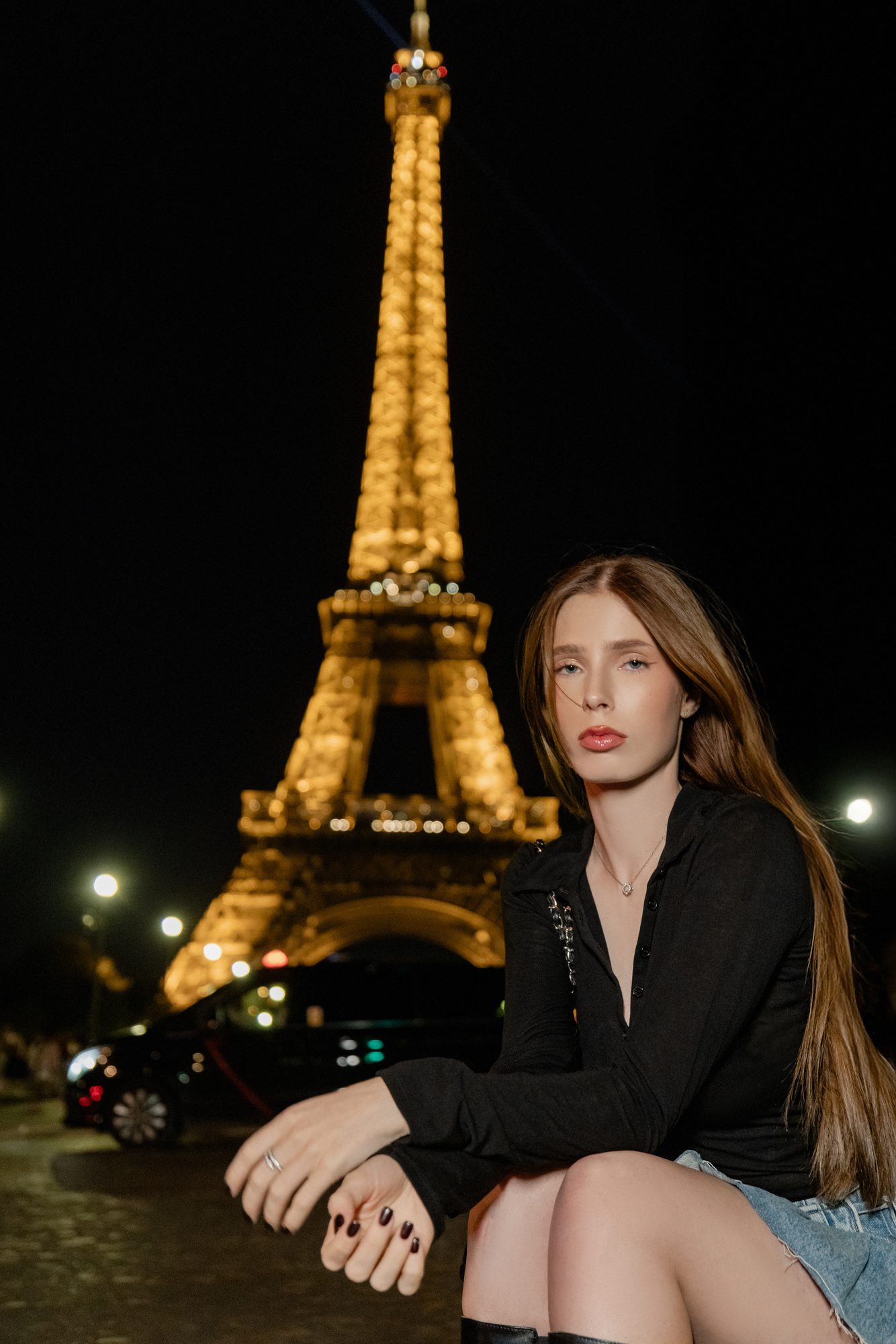
Rue de l'Université, at the corner with Avenue de la Bourdonnais, puts the tower between two rows of Paris facades. Avenue de Camoëns in the 16th, near Trocadéro, does the same from the other bank and is less known. In these streets the tower fills the gap between the buildings, so the frame is tight and vertical. People live here. Keep your voice down at night.
From the Seine
The Batobus river shuttle has a stop called Tour Eiffel. From the water the photo is hard: night mode needs a few seconds of stillness and a boat does not give you any.
Why your phone gets the face or the tower
The tower is very bright and you are standing in the dark. A phone sets its brightness for one of them. If it picks the tower, your face goes black. If it picks your face, the tower turns into a white smear.
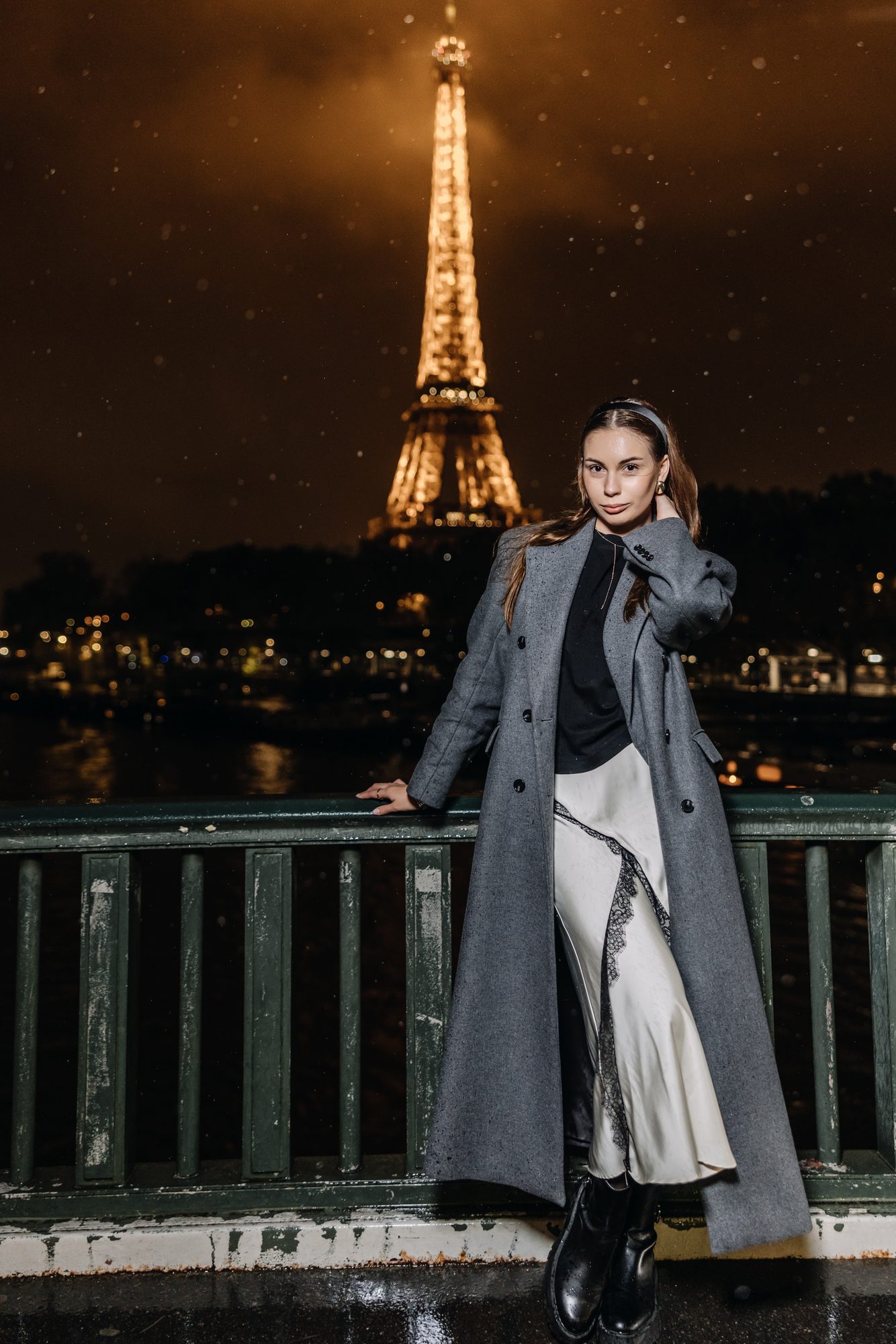
The fix is light on your face. Stand under a street lamp or near a lit facade, turned so the light falls on you, and keep the tower behind you. Then the gap between you and the tower is small enough for the phone to handle. I bring a light.
Night mode helps, but it takes a few seconds to collect light, and both the phone and the person must stay still. Prop the phone against a wall or railing, or use a small tripod. Turn the flash off. From a few metres it barely reaches you, it flattens the face, and on some phones automatic night mode does not work while the flash is on.
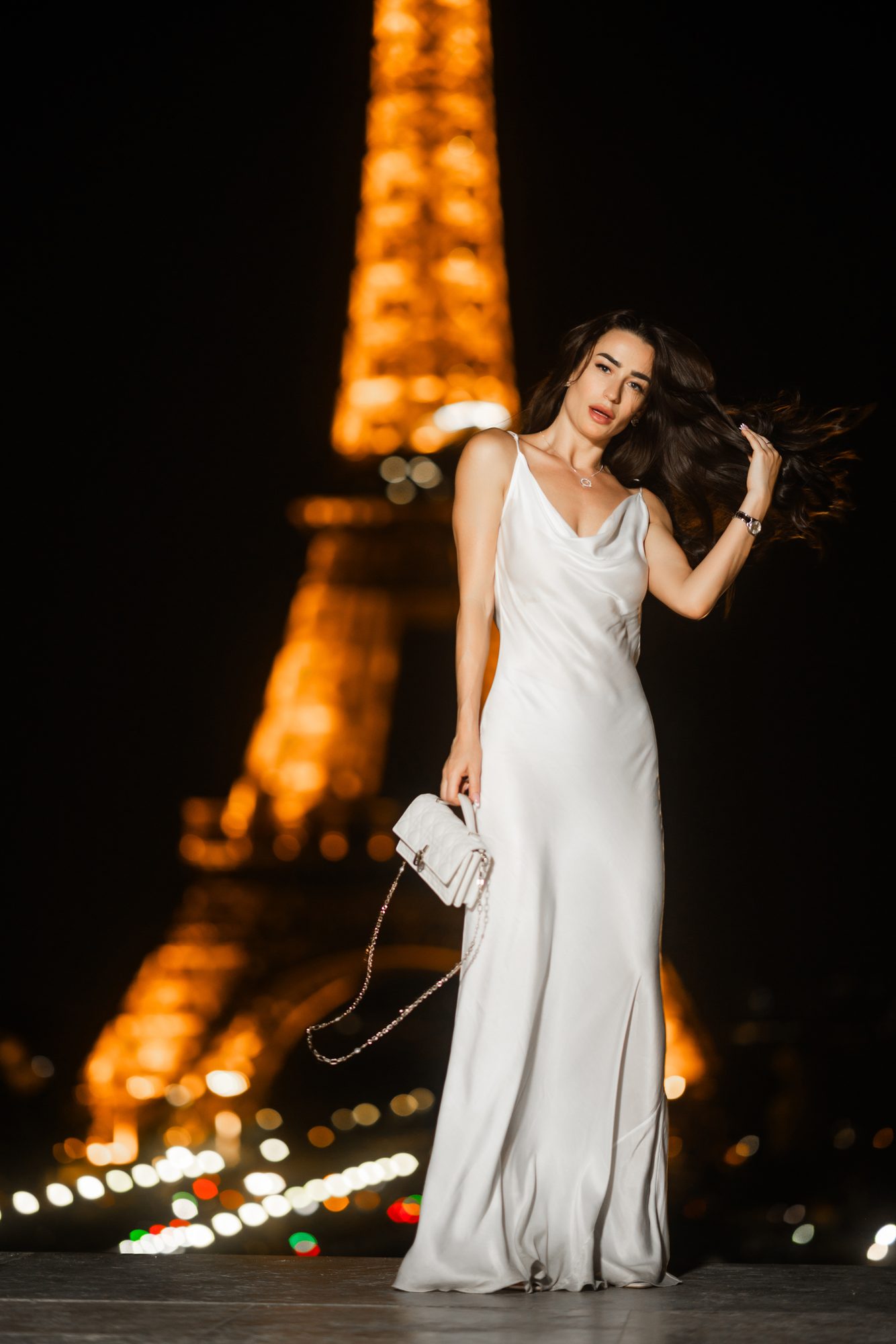
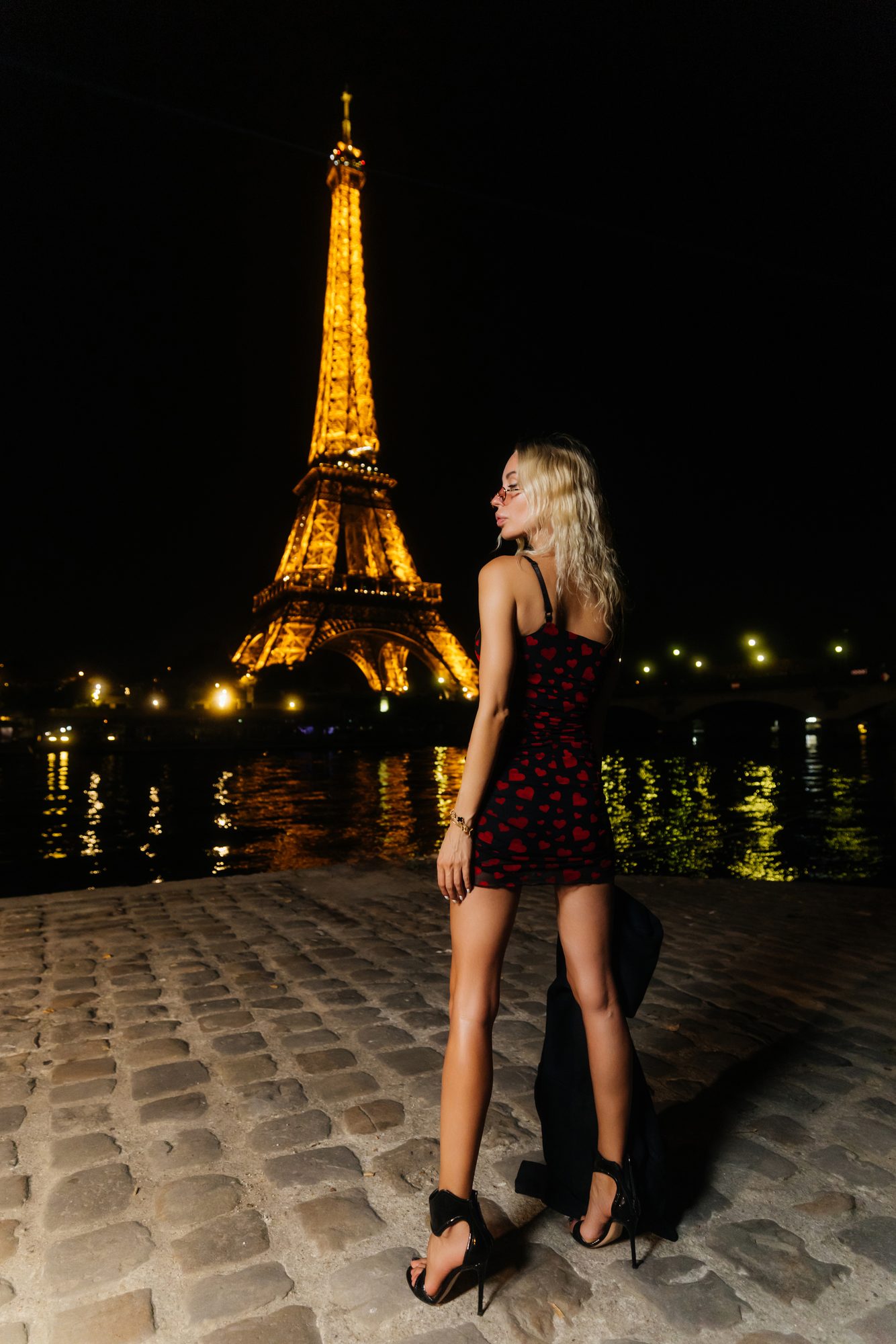
What to wear
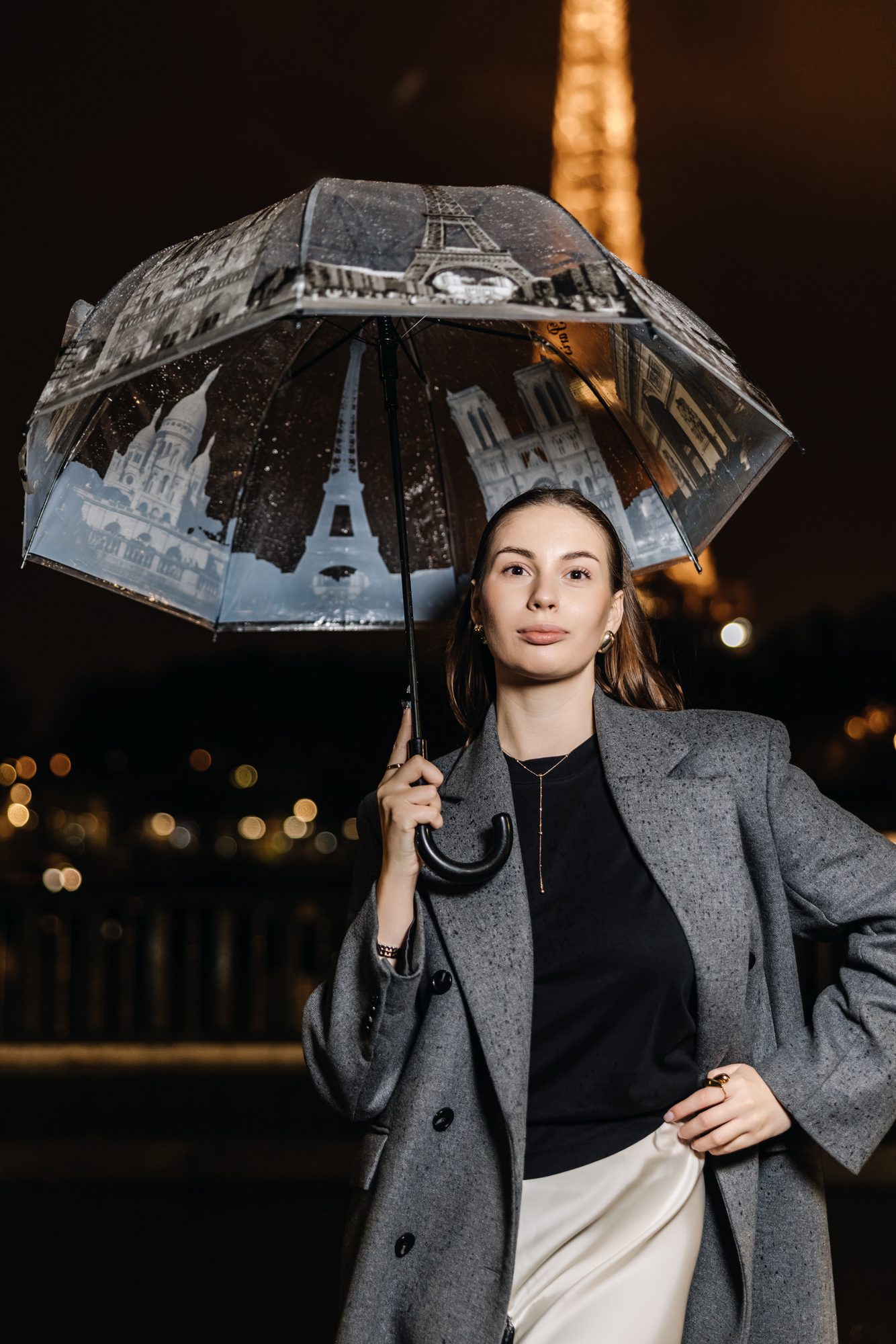
Against a dark sky, light colours read best: white, cream, beige, red. Black clothes merge into the background unless there is light on you. A light coat over a dark outfit is enough to separate you from the night.
Pickpockets, sellers, the last metro
British government travel advice for France says pickpockets can work in gangs, with one person distracting you while another goes into your bag, and tells visitors not to get distracted around tourist attractions. Posing for a photo is that kind of distraction. Wear your bag across your body and do not leave it on the ground.
Street sellers work around the tower and Trocadéro in numbers. In one four-day police operation in November 2025, 281 people were moved on from the two sites.
On weeknights the last metro trains leave at around 12.30 to 12.40am, according to RATP. On Fridays, Saturdays and the eve of public holidays the service runs to about 2.15am. If you stay for the midnight sparkle on a weeknight, go straight to the station. After that there are Noctilien night buses.
Bring a layer. The tower's own site warns that evenings in Paris can be cool even in summer.
I photograph night sessions here, at the Eiffel Tower.